

A GIFT FROM THE GODS


A GIFT FROM THE GODS
Music is a form of art that has been around for centuries, and it is a way of expression that holds a lot of significance for many people. Music is a form of communication, entertainment, and celebration and it is used in different cultures all around the world as an important part of their culture and traditions.
In ancient Greece, music played an essential part of their lives on many different occasions. Interestingly enough, musical ceremonies always incorporated elements of dance, poetry and lyrics. Some of these ceremonies included festivals, theater, military activities, weddings and drinking parties. The value that ancient Greeks had for music was due to the fact that they believed it was a gift from the gods (Cartwright).
As music was regarded with such godliness, the invention of certain instruments were credited to specific gods. For example, Hermes, god of thieves and travel was the first to create a lyre out of a turtle shell and seven strings, and when played the sound was so beautiful that Apollo - god of music - didn’t punish Hermes for stealing cattle from him, but instead traded his cattle for the lyre (Awana). Similar stories were told in relation to Hermes’ son Pan for creating the panpipe, and Athena for inventing the flute. The oldest surviving musical instrument was the auloi, which was made of bone and dates back to the Neolithic Age. During the Bronze Age there were marble sculptures of people playing instruments, as well as hieroglyphic script of musical instruments. Although the auloi is the oldest noted instrument, the Greeks considered it more of a competitor - as this was the instrument used to challenge Apollo to a musical competition, and so the lyre was a ‘real’ Greek instrument (Cartwright).
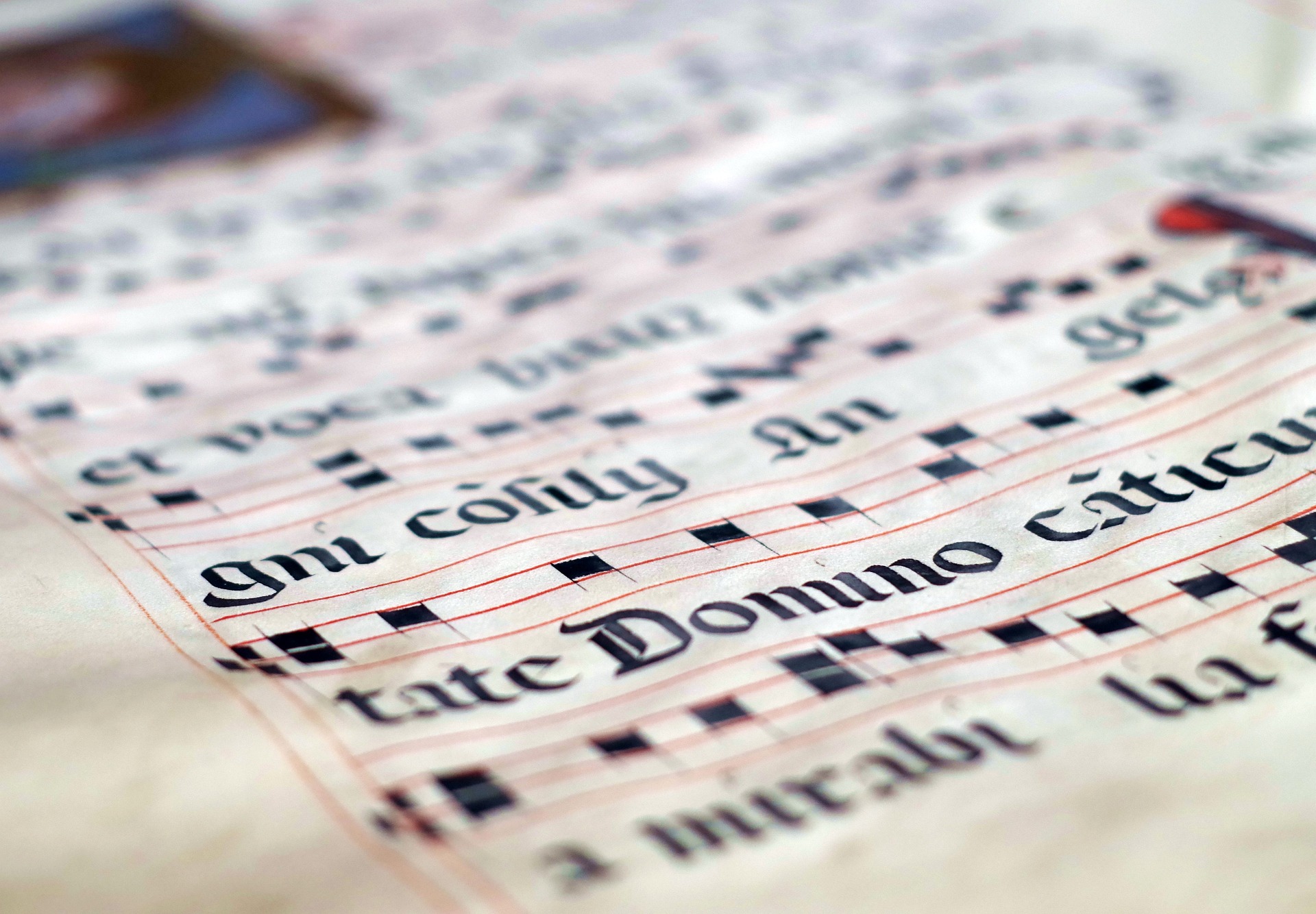
The study of music theory was also dated back to as early as the 6th century BCE. The earliest surviving text was the Harmonic Elements by Aristoxenus which was written in the 4th century BCE. The study of music theory consisted mostly of philosophy and the “mathematical expression of the cosmic order,” (Cartwright). As music was greatly related to philosophy, it was believed that peaceful and calming music had the power to heal both the body and mind. Therefore, philosopher Plato banned instruments that were able to create fast beats and tempos, and over complicated rhythms. As soft music was able to strengthen and cleanse the body and soul, it was believed that music of intensity was morally dangerous and could have harmful effects.
The celebratory ceremonies that always incorporated music were mostly either religious or pleasure based. Religious practices were usually accompanied by music, such as the sacrifices to the gods. The Great Dionysia festivals included prayers and hymns which were sung throughout by the chorus groups and professional musicians. Music, dance, poetry and theater were also very competitive activities because excelling in these art forms was an honor to the gods. The earliest noted musical competitions were in Sparta, Argos and Paros which are dated back to 7th century BCE. Lastly, music was such an integral part of Greek life that men would sing both during their meals and on their way home, while women would play instruments and write poetry in their homes (Cartwright).
The importance of music to ancient Greeks went way beyond entertainment, as the bond it created to the gods and within one's body was of high standard and belief. From the very creation of music, to the way it was used - it always related back to the gods. For the Greeks to view music as something so godlike only proves how greatly they appreciated this in their lives.
It should also be a lesson for people today, to understand the power that music has, and the healing energy that can be created.
Who knew that playing an instrument could be seen as godlike…
Works Cited:
Awana, Momi. “Instruments Used in Greek Mythology.” Heremes’ Lyre. 2014. Web.
Cartwright, Mark. “Ancient Greek Music.” Musical Origins. 2013. Web.