

THE MUSIC OF SPIDERWEBS

I've previously covered the intelligence of elephants to understand and react to music, further supporting the notion that music is quite the universal language, cross species. What if I told you that this no only applies to other animals, but smaller creatures as well, say arachnids. In a stunning advancement in attempting to communicate and understand species other than ours, scientists at MIT have translated the patterns of spiderwebs, into music.
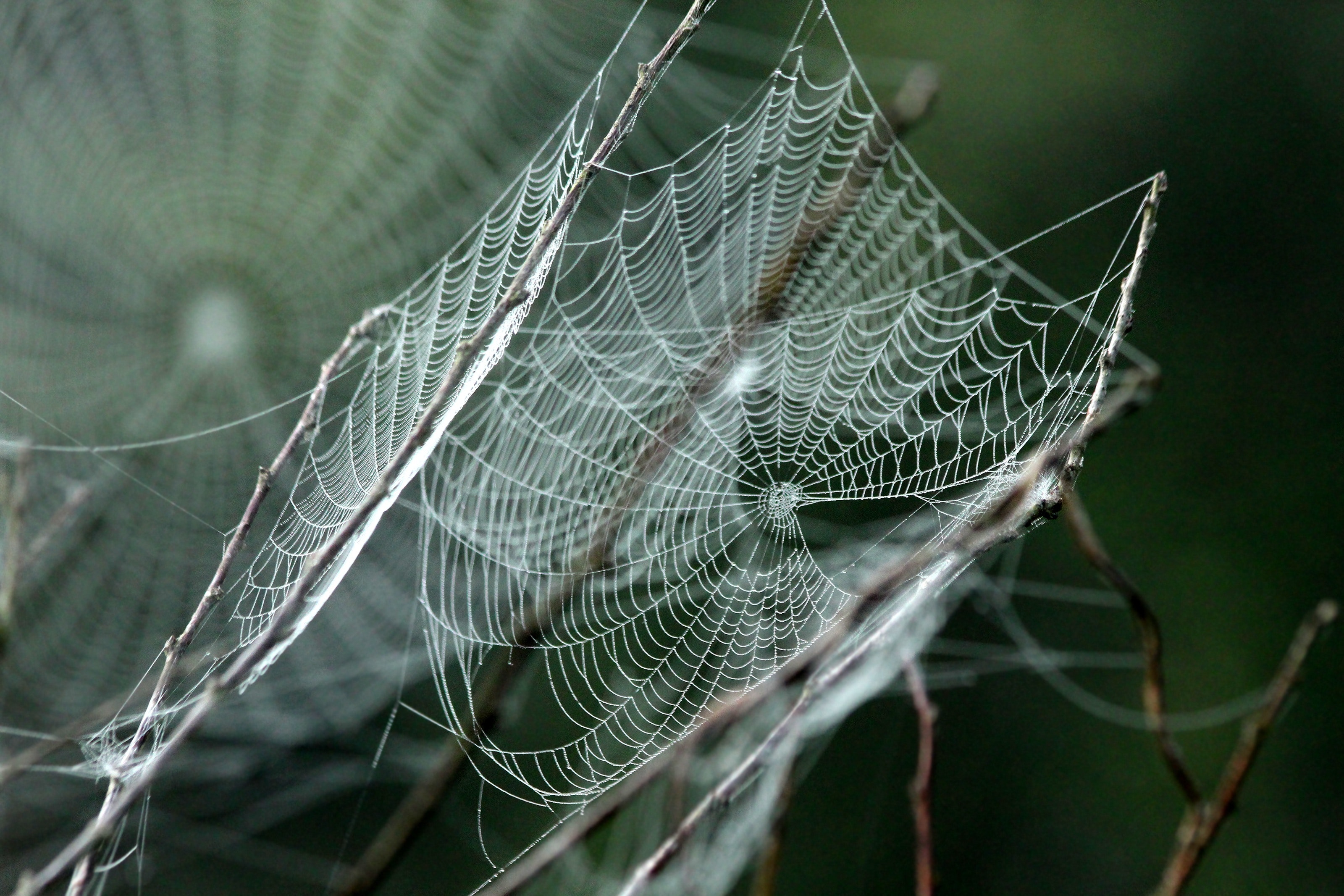
Spiders are quite the intriguing creature and don't see the world in the same way that us humans do. Grant they are much smaller that we are, I'm referring to their lack of sight that is compensated by their hypersensitive sense of touch. Spiders rely on tiny hairs that encompass the majority of their bodies and legs to familiarize themselves with their environments. In addition, the webs they weave to catch prey compliments their powerful sense of touch as spiders are able to differentiate visitors on their webs based on the different vibrations produced on the web. So a spider would be able to tell if an unfortunate fly got caught or another fellow spider had come for a visit.
Given a spider's reliance on their sense of touch and advanced perception of vibrations, scientists reasoned that it would be possible to understand how to spiders communicate with each other if we could understand the vibrations produced in their webs. According to head scientist of the scientific endeavor Markus Buehler, "The spider lives in an environment of vibrating strings, they sense their world through vibrations, which have different frequencies." While the frequencies on these webs are felt by the spider, scientists scanned the webs with lasers, translated them into a two-dimensional image, created a three-dimensional network of webs and then assigned sound frequencies to different strands to create a full "musical piece". I didn't know what to expect when listening to these spider web frequencies, but I couldn't have imaged that it would sound like that. In short, it sounds like something straight out of a nightmare. Feel free to check it out here, but fair warning that it is really odd.
If you checked it out, kind of creepy right? If you have a virtual reality system, you'd be able to really immerse yourself in a spider's world. The scientists created a VR program based on their findings called Spider's Canvas, which allows people to not only hear the music of spider vibrations but to also interact with the web strands to help people better understand how spiders see the world.