
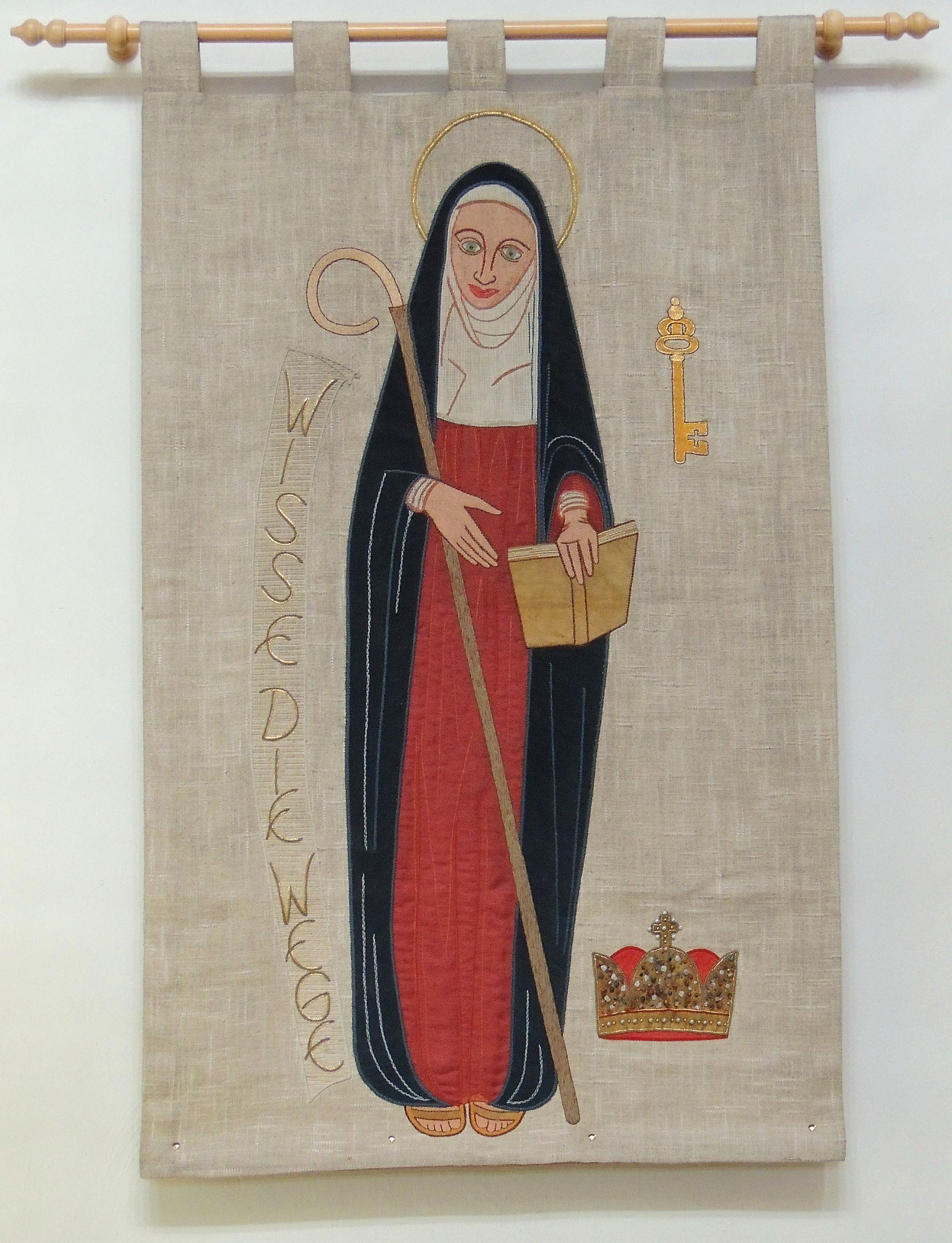
THE WOMAN THAT DID IT ALL: HILDEGARD VON BINGEN

For this Women's History Month spotlight, we take you all the way back to 12th Century Germany. Hildegard Von Bingen, also known as Saint Hildegard, was a Benedictine Abbess, the head of the nuns. On top of her devoted Catholic life, Hildegard was also known for her writing, philosophy, visions, and musical compositions.
Hildegard was born in or around 1098 in the Rhineland, now Western Germany, to lower nobility parents. At the age of 8-14, her parents offered her as an oblate, a person dedicated to serving God, which officially began her life in the religious sector.
From an early age, Hildegard reported visions, or what she called "the reflection of the living light". She believed that these visions were God talking to her through her five senses, and she later took a vision into interpretation to begin her writings.
Musical Life
Hildegard's most popular composition is Ordo Virtutum, Latin for "Order of the Virtues", a Latin mortality play that is comprised of 82 songs. Although the exact date is not known for certain, it's believed that this composition was released in 1151, making her the first woman composer in Western music. Ordo Virtutum is known to be the oldest surviving musical drama that is not attached to a liturgy, a public worship by a religious group. Take a listen to the Hildegard's most famous work below, which showcases the allegory of the Christian story, portrayed by the struggle between 16 Virtues and the Devil over the destiny of the female soul.
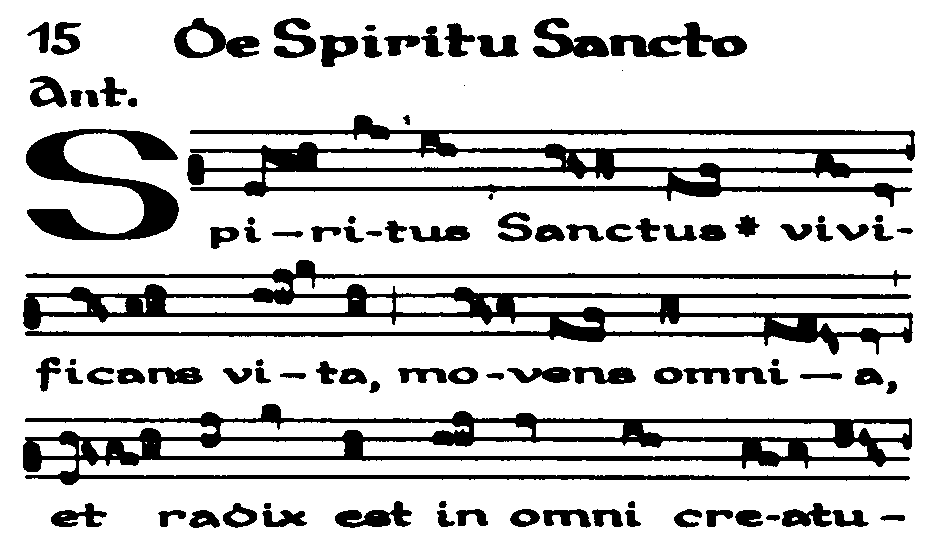
Symphonia Armoniae Celestium Revelationum, a collection of 77 of Hildegard's liturgical songs, offer her views on her world at the time through hymns, antiphons, responsories, and sequences. While it is clear she was following classic and contemporary chanting styles in this collection, she pushed the musical boundaries of her time, offering something new that her community could sing along to.
For a women who claimed to be uneducated, Hildegard sure did spend a lot of time educating her community through music, as well as advocating for more freedom for the nuns she oversaw. Women were seen as far weaker than men in the 12th Century, and were never given the chance to be listened to, but by using her role as an Abbess, her words were heard more than any women in her time. Hildegard was officially recognized and labeled as a Saint in 2012 by Pope Benedict XVI. From the mouth of Saint Hildegard herself, "woman may be made from man, but no man is made without a woman."
For more information on Hildegard's music and writings, I highly recommend you check out this article and resource.