
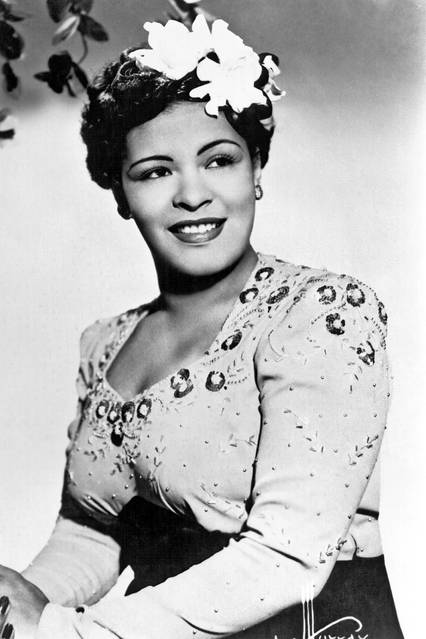
WOMEN'S HISTORY MONTH: BILLIE HOLIDAY
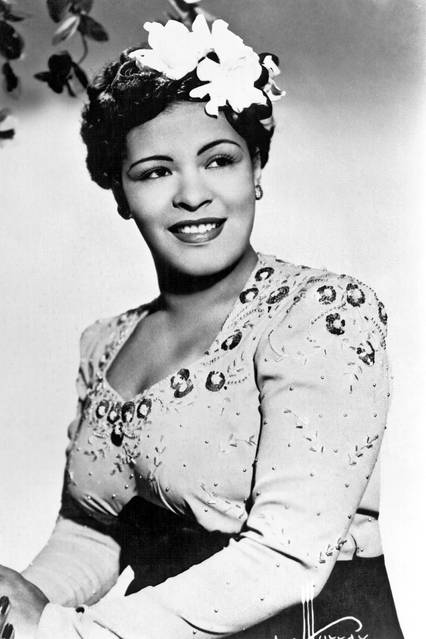
Any fan of jazz would probably know the name Billie Holiday by heart, or would probably know her as Lady Day. One of the most famous jazz musicians of all time, she was best know for her powerful vocal musicality and ability to improvise on the spot, an essential skill for any jazz musician. Today, we'll go over the extraordinary life and legacy of Billie Holiday.
Billie Holiday was born on April 7, 1915 in Philadelphia, Pennsylvania. Billie Holiday wasn't her birth given name though and there's a lot of confusion regarding her original name (some sources say Elinore Harris, others say Eleanora Fagan). Holiday was a result of a teenage pregnancy and unfortunately, her father wasn't around much when she was growing up. Though, her father was believed to be Clarence Holiday, who grew up to become a great jazz musician himself. I guess the apple doesn't fall far from the tree given where Billie ended up in her career.
Her childhood didn't get any easier. Her mother, Sadie, would marry another man when she was just 5 years old, but he would end up leaving them to struggle a few years later. Billie would also choose to skip school and her and her mother were forced to go to court regarding her truancy. Billie would wind up at a facility for troubled African American girls at the age of 9. She returned to her mother's custody that same year, but would then be a victim of sexual assault just the next year. Despite all the hardship she's had to endure in her early childhood, she found comfort in music, especially Louis Armstrong and Bessie Smith.
Her singing career would begin at the age of 15, where she would sing at local clubs to put herself and her voice out there. This is around the same time she decided to take up the new name "Billie". At age 18, she would be discovered by producer John Hammond while she was singing at a Harlem jazz club. Hammond joined Holiday with rising musician Benny Goodman and with him, she would sing the vocals for various tracks. This would skyrocket her career as she would continue to collaborate with other jazz musicians. After joining Count Basie's orchestra, saxophonist Lester Young would give her the nickname "Lady Day", a moniker that she would be remembered by. She would then join Artie Shaw's orchestra, making history as the first female African American vocalist to work with a white orchestra. Though, the professional relationship wouldn't last long as unfortunately, promoters would ridicule her for her race and she would end up leaving the orchestra.
She continued to be censored for her heritage in the music business. Columbia Records helped Holiday to debut arguably two of her most famous songs: "God Bless the Child" and "Strange Fruit". However, Columbia had no plans to produce "Strange Fruit" because of its underlying story about the lynching of African Americans in the South. She would instead record this song with the Commodore label and because of the controversy behind it, it would actually make the song even more famous. "Strange Fruit" would also gain even more notoriety as the song that the Federal Bureau of Narcotics tried to silence in conjunction with her narcotic issues. The commissioner of the FBN, Harry Anslinger, would go on to claim that her heroin addiction made "Strange Fruit" a dangerous song to release in the public. However, Anslinger was known to be racist and many people say Anslinger's motives to be derived from his hate for African American as opposed to Holiday's drug issues.
She was at the peak of her fame, but tragically it was cut short due to her own fatal choices. She was known to be a heavy drinker, and after marrying James Monroe in 1941, would pick up on smoking opium as well. While the marriage didn't last, her addiction to drugs did. She would start using heroin after meeting her next boyfriend and her drug and alcohol intake would only increase after the death of her mother in 1945. Even though her life would come full circle when she got the opportunity to share the big screen with one of her idols Louis Armstrong in the film New Orleans in 1947 and she continued touring throughout the 1950's, her drug and alcohol dependence finally caught up with her in 1959. She was arrested multiple times for possession of narcotics in the 50s, even once getting arrested after being admitted to the hospital for heart and liver issues. Holiday would succumb to drug and alcohol complications on July 17, 1959, an unfortunate death far too common among successful celebrities.
Her music and legacy is still felt to this day. Her autobiography, Lady Sings the Blues (which she reportedly did not read herself) was written with the help of William Dufty and would be turned into a film of the same name in 1972, which featured Diana Ross playing the late Billie Holiday. Holiday would also be inducted into the Rock and Roll Hall of Fame in 2000. Even as recent as 2021, Holiday's legacy is felt as Hulu released The United States Vs. Billie Holiday, a film that specifically covered her debacle with the Federal Bureau of Narcotics regarding "Strange Fruit". The actress who played Holiday in the film, Andra Day, would win the Golden Globe for best actress in a drama in February 2021 and be honored by the Black Women Film Network for her tremendous job in the role. This is a great thing to see and I'm so glad that Holiday's memory is still very much with us, even more than 50 years later.