
JAZZ APPRECIATION MONTH: DAXOPHONE

With the month of April being Jazz Appreciation Month, I thought I'd dive into the genre of jazz and look at the unique and weird aspect of it. I thought to myself that since jazz is predicated on improvisation and is one of the more free-flowing genres out there, surely some jazz musicians have experimented with using different instruments that are not typically known to be jazz instruments in their music. In my research, I found some fascinated artists. Rufus Harvey took the bagpipes and created some hot jazz tunes with the odd instrument. Dorothy Ashby is revered for her inclusion of the harp into jazz and her landmark piece Afro-Harping. Steve Turre is best known for being a trombonist, but he also carries around a variety of conch shells that he's drilled holes into to turn them into instruments. While turning conch shells into musical instruments is ambitious and really out-there, I found a completely new instrument that I hadn't heard of before that really caught my eye.

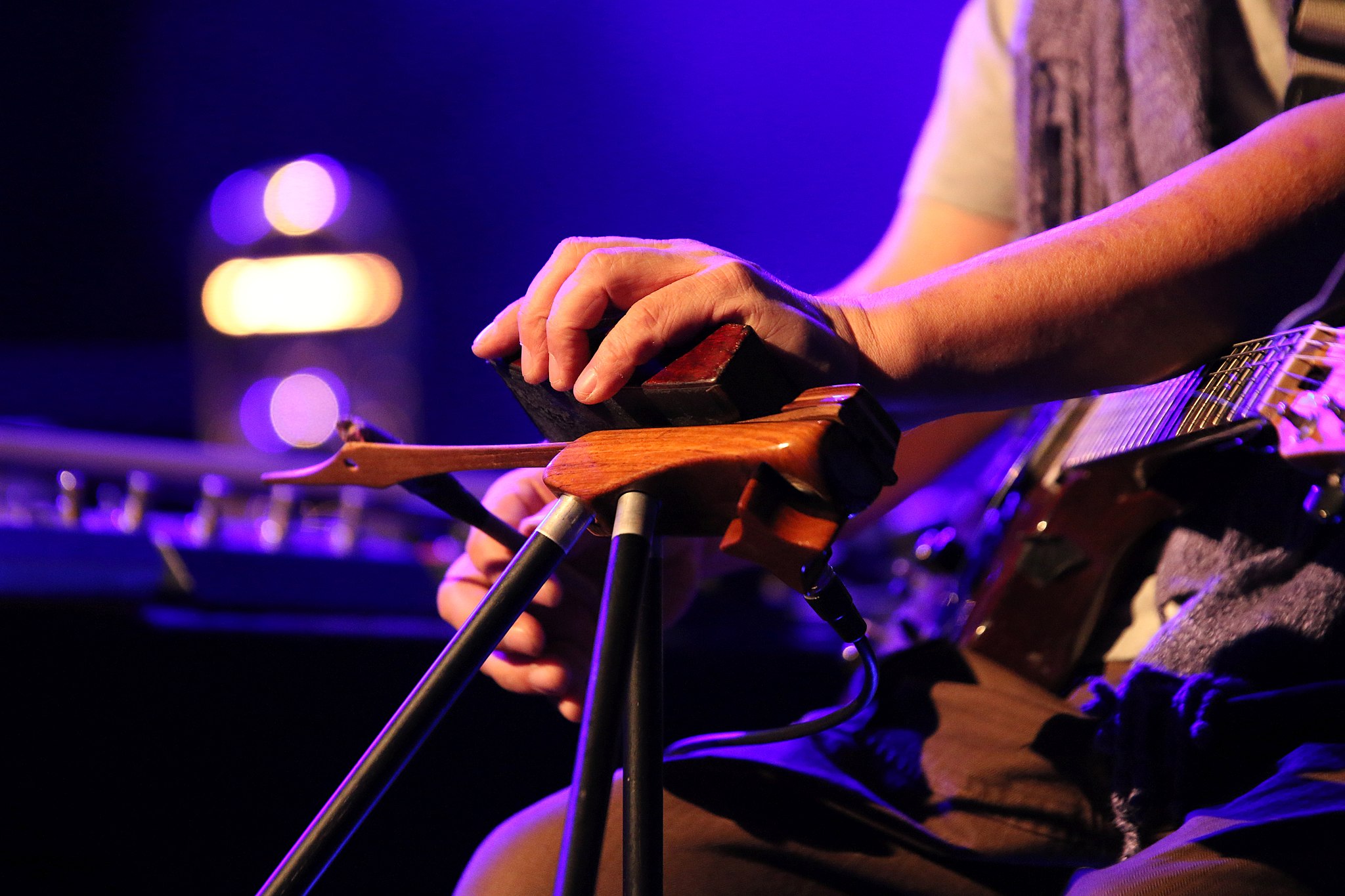
I would certainly understand if you're a bit confused right now. You might've looked at the title of this article that thought I made a grave spelling error, I mean the saxophone is one of the most popular instruments in jazz. And then you look at the picture of some wooden contraction I've provided and now you might be even more confused, especially because you might assume that by the presence of a bow that this is a string instrument and you'd kind of be right? I'll try to explain this instrument as best I can. Let me introduce you to the Daxophone.
The daxophone is a relatively new instrument, invented by Hans Reichel in 1987. Though the instrument itself may look a bit confusing, Reichel said, "The basic principle of this instrument can't be more simple; it's a tongue, as well as a ruler at the end of a table." When it was first invented, the daxophone looked a lot more rudimentary, as seen here. There are four parts that make up this odd instruments: tongue, bow, dax and soundbox. The tongue is the wooden slab that you see protruding out from the instrument; this is the main sound producing part and is what the bow makes contact with. The bow itself is the same as your typical violin bow from my estimation. The dax is a little curved wooden thing that is separate from the instrument that is applied to the tongue to adjust the pitch, it can be seen towards the bottom of the first picture. The soundbox is what sits underneath the tongue and amplifies the vibrations, can be electronic to be then plugged into an amp.
To play the daxophone, I think it would be best to show a video than if I just tried to explain it myself.
As you can see, the bow is used to make contact with the tongue while the dax is applied to different areas along the tongue to generate different pitches. Also, the instrument makes quite an interesting sound, very unique from any conventional instrument, and some of it's sounds even sound like human hums! Sounds are not only influenced by the positioning of the bow and dax against the tongue, but the shape of the tongue itself as the tongue is detachable. Also, it's not too difficult to actually make one of these tongues so it could be even more personalized, which I think is a really cool concept for an instrument.
When it comes to jazz, Reichel himself took his own instrument and decided to inject it into the world of jazz. Reichel has since put out multiple albums that feature his daxophone and while not all of his albums are embedded in jazz, many of his compositions can be characterized as jazz. I'd say most of those pieces come from his album Yuxo: A New Daxophone Operetta, and I'd highly recommend checking out the piece Le Bal (New Version), which I think is the piece that is the most jazzy out of the bunch. Though, if you really want to check out the range of the daxophone and how it came be played in different ways, why not listen to the whole album! I'm not sure if the daxophone will ever become a mainstream instrument, but it's certainly one of the most unique instruments out there.